Taxi Driver — Three Seasons of Justice Where the Law Fails
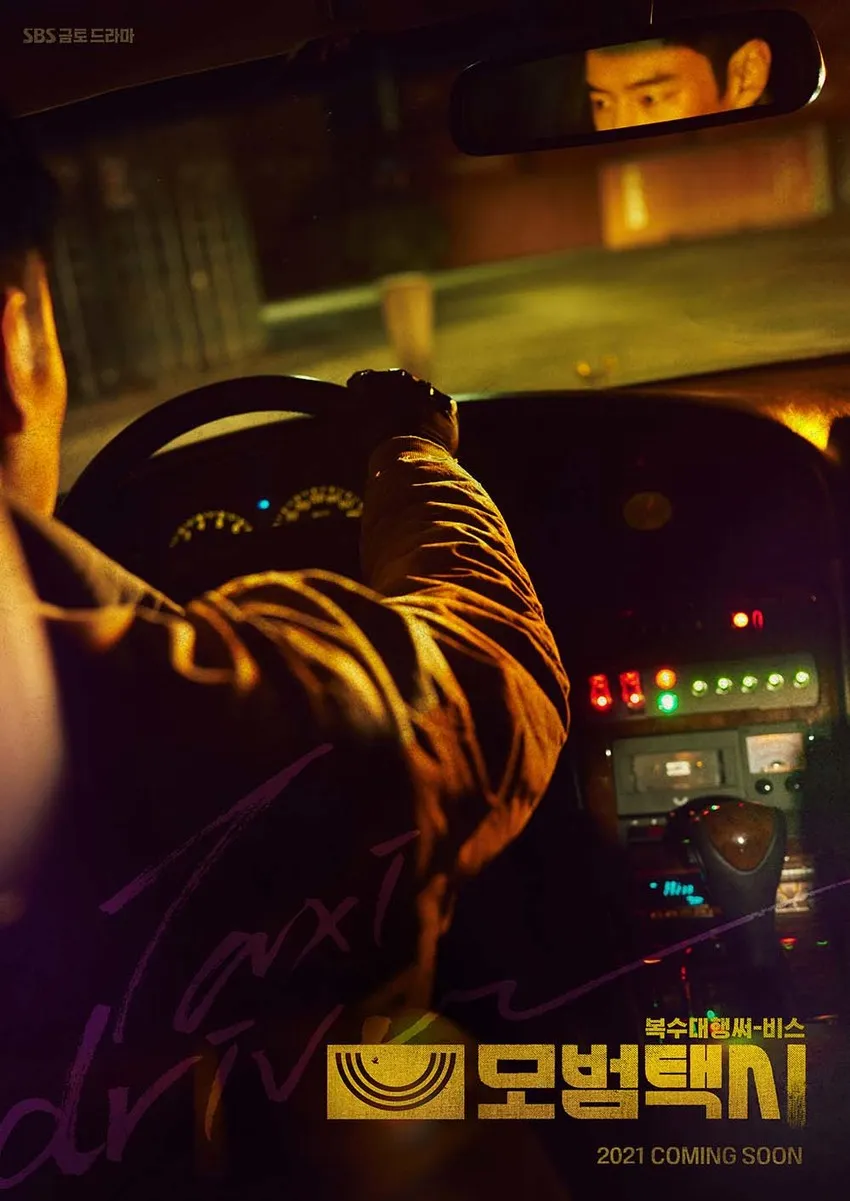
There are people the law cannot protect. Sometimes the evidence is insufficient. Sometimes the statute of limitations has expired. Sometimes the perpetrator holds power. The reasons vary, but the outcome is always the same: the victim swallows their tears and the world moves on as if nothing happened. Taxi Driver cuts straight to that moment. The cabs of Rainbow Taxi — running for those abandoned in the law's blind spots — completed a 48-episode journey across three seasons since their first departure in 2021. With each season came more intricately engineered revenge, characters of greater psychological depth, and the same cathartic release that audiences have come to count on. Here is a look at why Taxi Driver is not simply another dark-hero drama, but a genre unto itself.
From Webtoon to Franchise — The Birth of Taxi Driver
Taxi Driver traces its roots to the webtoon of the same name by writer Carlos (최규석, Choi Gyu-seok). The original work poses a clear and potent question: what if someone took it upon themselves to punish the villains the law cannot touch? The drama builds on that simple yet powerful premise, preserving the skeleton of the source material while evolving into something entirely its own — layering the visceral realism that only live-action can provide with the magnetic presence of its cast.
Writers 오상호(Oh Sang-ho) and 이지현(Lee Ji-hyeon) and director 박준우(Park Joon-woo) honored the episodic structure of the original while planting the seeds of a longer arc. Each episode brings a new client's story, yet a single spine runs through them all — 김도기(Kim Do-gi)'s past and his confrontation with a vast criminal organization — binding the entire season into one coherent whole. That architecture carried through to Seasons 2 and 3, forging the franchise's distinctive rhythm: the immediate satisfaction of each episode's justice, held in tension with a season-long pressure that never fully releases. It is Taxi Driver's secret weapon, and the reason audiences could not look away.
이제훈(Lee Je-hoon) the Actor, 김도기(Kim Do-gi) the Character
For all 48 episodes, the series rested on two things: the actor 이제훈(Lee Je-hoon) and the character 김도기(Kim Do-gi). A former special forces soldier, a son who lost his mother, a taxi driver dispensing justice outside the law — Kim Do-gi carries all of those identities within a single frame. Lee Je-hoon brought that layered character far more depth than a conventional action hero would require.
If Season 1's Do-gi was a blade burning with vengeance, by Season 2 he carried the weight of a team leader, and by Season 3 he allowed himself to show the human fatigue of someone who has been fighting for a very long time. Lee Je-hoon's greatest strength is not the physical command he brings to action sequences — it is the barely perceptible shifts in his expression and gaze as he absorbs each client's story. In those moments, the audience understands, in their bones, why Kim Do-gi cannot stop.
The Rainbow Taxi Family
Taxi Driver is not a one-man hero story, and the reason is Rainbow Taxi as a team. 김의성(Kim Eui-sung)'s 장성철(Jang Sung-chul) is the operation's moral compass and its chief strategist — a middle-aged man combining warmth and quiet resolve in a combination rarely seen in the dark-hero genre. Kim Eui-sung's performance gives the character its emotional gravity, making him the franchise's anchor.
표예진(Pyo Ye-jin)'s 안고은(Ahn Go-eun) is the team's brain. The hacker and tech specialist grows more audacious and precise with every season, embodying what revenge looks like in the digital age. 장혁진(Jang Hyuk-jin)'s 최경구(Choi Kyung-gu) is the team's muscle, yet carries a quiet tenderness within. 배유람(Bae Yu-ram)'s 박진언(Park Jin-eon) is the master of disguise, delivering the pleasure of a completely different character in every operation. And 유승목(Yoo Seung-mok)'s 조진우(Jo Jin-woo) rounds out an ensemble that went through all three seasons without a single substitution — in itself, the franchise's greatest asset.
Each season also brought new arrivals and farewells. In Season 1, 이솜(Lee Som)'s prosecutor 강하나(Kang Ha-na) embodied the tension between justice inside the law and justice outside it, while 차지연(Cha Ji-yeon)'s Godmother left a searing impression as the season's final villain. Season 2's addition of 신재하(Shin Jae-ha) as hacker 온하준(On Ha-jun) injected fresh energy into the team and sparked an unexpected chemistry with Pyo Ye-jin's Ahn Go-eun.
Three Seasons, Three Evolutions
Sustaining freshness across multiple seasons is one of the hardest problems a franchise faces. Taxi Driver's solution is instructive. Season 1 (2021), rated 19+, boldly reproduced the raw revenge drama of the source webtoon and established the series' identity. Director 박준우(Park Joon-woo)'s sharp direction held a delicate balance — confronting the darkest corners of society without ever sacrificing catharsis.
Season 2 (2023) adjusted to a 15+ rating, shifting the emphasis from overt violence to the precision of the operations and psychological suspense. The co-direction of 이단(Lee Dan) and 장영석(Jang Young-seok) preserved Season 1's tone while refining both the visual aesthetics and the pacing. Writer 오상호(Oh Sang-ho), who carried the narrative across all three seasons, deepened the franchise's dramatic coherence; his most notable growth in Season 2 was expanding the clients' stories from straightforward revenge scenarios into more morally complex dilemmas.
Season 3 (2025), under director 강보승(Kang Bo-seung), attempts a summation of the franchise. By the third season, Rainbow Taxi is no longer simply a revenge-for-hire outfit. The weariness accumulating in people who have spent years fighting outside the law, and the question of why they still cannot stop, gives this season a depth that distinguishes it from its predecessors.
Why the Dark Hero Resonates in Korea
The success of Taxi Driver must be understood against a specific emotional landscape in Korean society. Episodes drawn from real crime cases — child abuse, voice phishing scams, school violence, workplace power abuse, elder mistreatment — land harder precisely because audiences have read these stories in the news. That familiarity makes the drama's acts of revenge feel all the more viscerally satisfying. Taxi Driver provides a proxy outlet for public anger while quietly indicting the systemic contradictions that make such a service feel necessary in the first place.
Introduced to global audiences via Netflix and Rakuten Viki, the drama carries themes that resonate well beyond its Korean context. The limits of the law, the suffering of the vulnerable, the universal craving for justice — these are emotions that find an echo in any society. It is that universality that has allowed Taxi Driver to steadily expand its international audience across three seasons.
What 48 Episodes Leave Behind
The Rainbow Taxi cab that departed in the spring of 2021 is still running in 2025. Forty-eight episodes. Three seasons. Four directors. A core ensemble that never once changed. Taxi Driver stands as the most definitive proof that the multi-season format can succeed in Korean drama. 이제훈(Lee Je-hoon)'s Kim Do-gi will be remembered as the dark hero who was loved longest and most deeply in the history of Korean television.
But Taxi Driver's true legacy does not live in ratings figures or viewership records. The most important thing this drama leaves behind is a set of questions. Where should people go when the law cannot protect them? Who is responsible for delivering justice? What is the bitterness that lingers after the thrill of proxy revenge? Beneath its satisfying revenge-thriller exterior, Taxi Driver never stops asking these uncomfortable questions, pressing on the audience's conscience with every episode. The world in which Rainbow Taxi must keep running is not a beautiful world. Yet the mere fact of that taxi's existence is, for someone, the last remaining hope.
The Soundtrack of Rainbow Taxi
The OST of Taxi Driver compresses each season's identity into sound. YB's 'SILENCE' from Season 1 pierces through Kim Do-gi's inner world — the rage hidden beneath a vigilante's silence, and the resolve to protect someone despite it all, carried on a rock sound.
가슴속에 슬픔의 칼이 돋을 때
When the blade of sorrow pierces deep within my chest
어디에도 기댈 곳이 나 없을 때
When there is nowhere I can lean on, nowhere to turn
고통을 참는다 난 오늘밤 Silence
I endure the pain — tonight, Silence
I wanna be your fighter in this dirty world
아직 너의 꿈이 살아 숨을 쉬잖니
Your dream is still alive, still breathing
SILENCE — YB | Spotify
Ha Hyun Woo's 'Fighter' from Season 2 is exactly what its title promises. His explosive vocals perfectly embody the spirit of Rainbow Taxi as they face bigger and stronger enemies.
널 가둬둔 어둠을 벗어나
Break free from the darkness that has caged you
And I fight fight 너를 위해
And I fight fight for you
세상 끝까지 달려간다
I'll run to the ends of the earth
Fight to the end
버티지 못할 고통은 없는 법
There is no pain too great to endure
결코 쓰러지지 않아
I will never fall
누구도 절대 널 가둘 순 없어
No one can ever cage you
Fighter — Ha Hyun Woo | Spotify
Car, the garden's 'Haven' from the same season strikes a completely different chord. It's a comfort offered to those who have run without rest in pursuit of justice — the very message Taxi Driver wants to deliver to its viewers: there is a place where the weary and wounded can rest.
좀 쉬어갈게요 너무 오랫동안 걸어왔네요
Let me rest a while — I've been walking far too long
잠시면 돼요 숨 돌릴 만큼만
Just a moment is enough, just enough to catch my breath
여기 멈추지 않아요 꿈에 본 곳에 꼭 다녀올래요
I won't stop here — I'll surely visit the place I've seen in my dreams
그 곳이 어디라 해도
Wherever that place may be
Haven (휴게소) — Car, the garden | Spotify
WOOSUNG's 'Driver' from Season 3 is both the series' period and its declaration. 'I'll be your driver' — Kim Do-gi's promise to keep driving to where the law looks away, resonating over a raw rock soundscape. A song that compresses three seasons into a single sentence.
어둠 속에 한 줄기 빛을
Searching for a single ray of light in the darkness
찾아 헤메일 때
When you wander, desperately seeking
절망 속에 발버둥 쳐도
Even as you struggle within despair
넘어지고 또 넘어질 때
When you fall, and fall again
혼자 감당하지 마
Don't face it alone
I'll be your driver
기다려줘 just stay alive
Wait for me — just stay alive
운명이 가로막는다 해도
Even if fate stands in the way
널 반드시 찾아내
I will find you, without fail
끝까지 지켜낼 거야
I will protect you to the very end
Driver — WOOSUNG | Spotify
Taxi Driver (Seasons 1-3) | Netflix, Rakuten Viki | 2021-2025 | 48 Episodes | Directors: Park Joon-woo (S1), Lee Dan & Jang Young-seok (S2), Kang Bo-seung (S3) | Writer: Oh Sang-ho | Based on webtoon by Carlos (Choi Gyu-seok)

